
When delivering propane, one of the most common questions homeowners and business owners ask is how far a propane truck can reach. The answer depends largely on the hose length used during delivery.
From residential propane tanks to larger tanks serving propane appliances like a heater, generator, grill, or fire pit, hose length plays a critical role in safe and efficient propane service.
Understanding how many feet of hose a delivery truck carries helps you prepare your home, plan proper tank placement, and install a propane system that allows safe, uninterrupted deliveries.
What Are Propane Delivery Trucks?
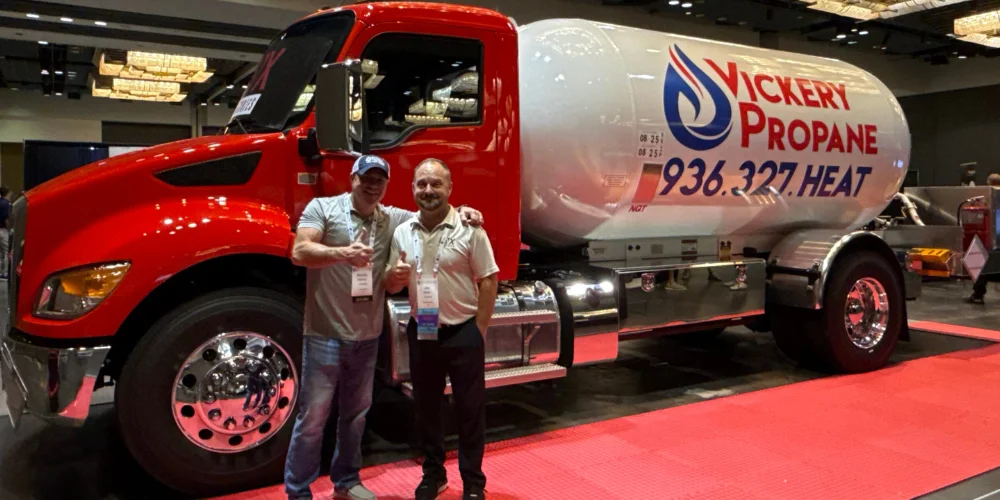
A propane truck is a specialized vehicle designed to transport and deliver propane (LP gas) under controlled pressure. These trucks deliver propane to homes, businesses, RVs, trailers, farms, and industrial sites. Propane delivery trucks are designed to handle large volumes, including 100 lb propane tanks and bulk storage systems.
Each propane truck is operated by a certified driver or technician trained in NFPA safety standards and hazardous material handling procedures. During delivery, the driver carefully positions the truck in the driveway or service area to maintain proper tank placement and safe hose length for safe, efficient propane transfer.
Key components of a propane truck include:
- Onboard storage tank or cylinder
- Pump and metering system
- Pressure regulator
- Delivery hose and fittings
- Safety valves and leak detector tools
How Long Is a Propane Delivery Truck Hose?
The length of a propane system hose is designed to provide flexibility, safety, and efficient access during fuel delivery. Most propane service providers use hoses that typically range between 75 and 100 feet. This range is sufficient to reach propane tanks located at standard distances from buildings.
The right hose length allows technicians to deliver propane to tanks located behind a home, alongside a detached garage, or near outdoor propane appliances without repositioning the truck. Larger or rural properties may require longer hoses to reach tanks farther from the driveway.
Typical hose length ranges:
- Residential delivery: 75–100 ft, suitable for standard home tank placement
- Rural or large properties: Up to 150 ft, allowing access to tanks farther from the driveway
- Commercial or industrial: Varies by site, depending on tank location and safety requirements
The Role of the Hose in Propane Delivery
The propane hose is the physical connection between the truck and your propane tank. It allows propane to flow from the truck’s pump into the tank valve while maintaining proper tank pressure and psi levels. Without enough hose, delivering propane becomes unsafe or impossible.
Why the hose is essential:
- Transfers propane safely during delivery service
- Regulates high-pressure propane flow before it enters the pipe system
- Prevents leaks at hose-to-pipe connection points
- Allows tanks located feet away from the driveway to be filled
Where Is the Hose Located on the Truck?
Most propane delivery trucks store the hose on a mounted reel at the side or rear of the vehicle. This allows the technician to pull out only the feet of the hose needed and keep the pathway clear. After delivery, the hose is rewound and secured before the truck leaves the property line.
Hose storage design helps:
- Prevent kinks and damage
- Protect fittings and valves
- Allow quick connect and disconnection
- Support smooth delivery of propane operations
Can the Size of a Hose Vary?
Yes. Hose size and length vary based on the type of tank, propane levels required, and the distance the tank is located from the driveway or gas line access point. This helps in improving propane delivery efficiency. Some deliveries may require a propane extension hose with a gauge to monitor tank levels during filling.
Factors affecting hose size:
- How far is the tank from the propane truck’s parking location
- Tank capacity, including 100 lb propane tanks or larger tanks
- Required flow rate and psi
- Tank placement and terrain
- Local NFPA regulations
When it comes to propane delivery equipment, Lux Industries sets a higher standard. Built on decades of hands-on experience in tank manufacturing and propane operations, Lux Industries designs and manufactures world-class propane bobtails engineered for reliability, safety, and performance.
Propane Delivery Hose Length Guidelines by Use Case
| Use Case | Typical Hose Length | Tank Type | Access Requirement | Delivery Complexity | Notes |
| Residential propane tank | 75–100 ft | Aboveground or underground | Clear driveway access | Low | Most common setup for home propane service |
| Rural or large property | 100–150 ft | Larger tanks (500–1,000 gal) | Extended pathway, open terrain | Medium | Longer hose needed when tank is farther from road |
| Commercial site | Custom length | Multiple or high-capacity tanks | Designated delivery zones | High | Requires site evaluation and specialist planning |
| Industrial facility | Custom-engineered | Bulk storage systems | Controlled access areas | Very High | Strict NFPA compliance and pressure controls |
| Portable or temporary setup | Shorter hoses | Cylinders or 100 lb propane | Manual access only | Low | Not suitable for propane truck hose connections |
Conclusion
The hose on a propane delivery truck is a critical part of safe propane service. Most trucks carry hoses between 75 and 100 feet long, providing enough reach for typical residential and commercial tank placements. Hose length, pressure rating, fittings, and safety standards all determine whether delivering propane can be completed smoothly. By understanding hose limitations, tank placement requirements, and safety considerations, property owners can avoid delays, prevent leaks, and ensure reliable propane levels year-round. Proper planning keeps your propane system safe, efficient, and ready to power everything from heaters and generators to grills and fire pits.
Power Smarter Propane Deliveries with Advanced Bobtail Design
Looking to upgrade your propane delivery equipment? Explore industry-leading propane bobtails and delivery systems engineered for safety, efficiency, and performance by Lux Industries.
Contact Us